January 5, 2026

From the Executive Director

2025 reminded us that, even in the face of uncertainty, meaningful progress is possible. Looking back at the stories we published over the past year, I’m inspired by the initiative and resilience demonstrated by our state’s health care community.


The articles below showcase just a few of many exciting efforts to advance the goals of the Roadmap to Health Care Safety for Massachusetts, which continues to guide our work. 


Many of these stories come from our readers across the Commonwealth. Are you or someone you know leading a promising safety improvement initiative? We’d love to hear from you—please email us with your suggestions.


Best wishes for a peaceful, healthy 2026! 


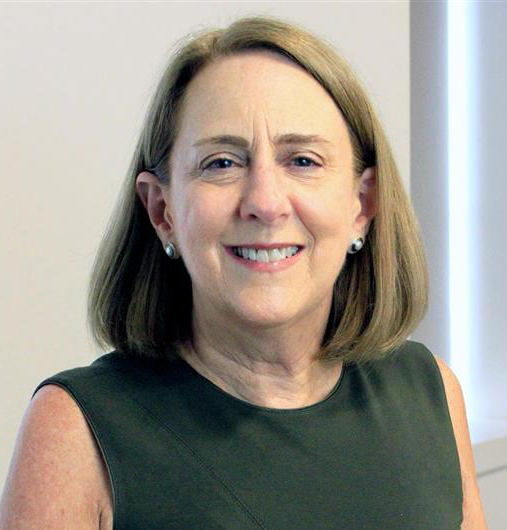
Barbara Fain

FIVE TOP STORIES FROM 2025

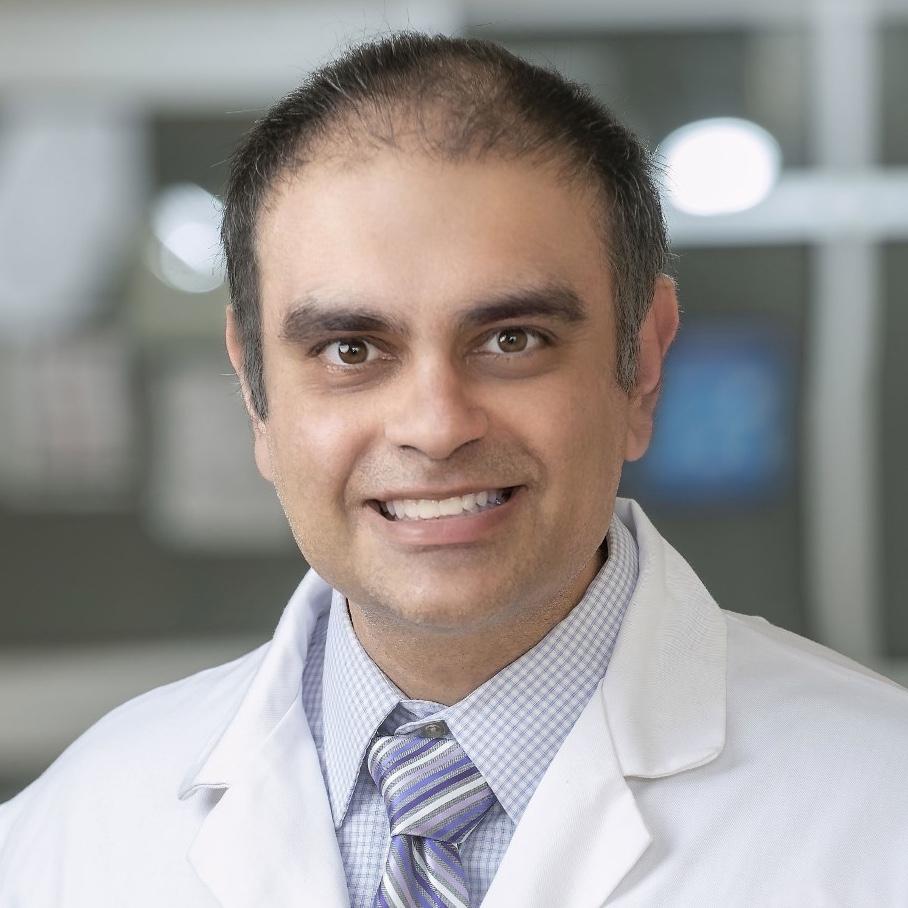
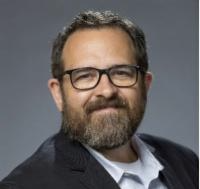
Q&A with Dr. Sundeep Shukla about working with Patient and Family Advisory Councils and the local community

Sundeep “Sunny” Shukla, M.D., M.B.A., has practiced emergency medicine in western Massachusetts for more than 10 years. As co-chair of the Patient and Family Advisory Council at Baystate Noble Hospital, he saw the benefits of hospitalcommunity collaboration. Now at Cooley Dickinson Hospital, Dr. Shukla applies his expertise in process improvement to advance safer care as Associate Chief Medical Officer.


Read the story and see the video

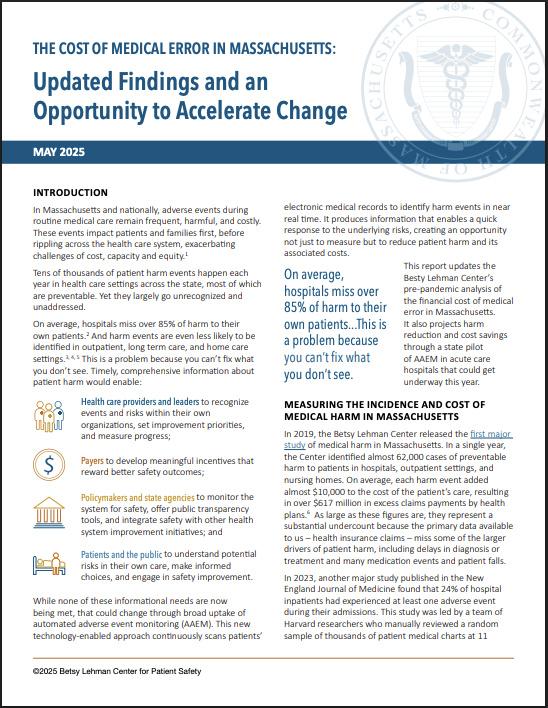
Cost of harm in Massachusetts hospitals pegged at $2.14 billion annually; opportunity for significant savings proposed

In an update to its 2019 report, the Betsy Lehman Center estimates Massachusetts payers spend $2.14 billion annually on extra care for patients harmed during hospital stays. To address this, the Center seeks state investment in a pilot using automated adverse event monitoring. This technology scans electronic medical records in near real time, helping hospitals improve safety daily. States already using it have cut harm by 25%, which could save $536 million for Massachusetts payers, including $111 million for MassHealth.


Read the story

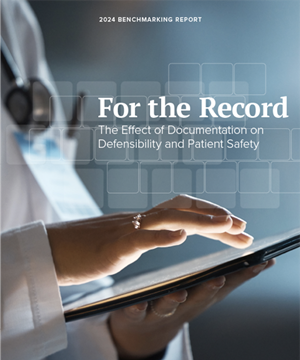
New report underscores the importance of documentation. Can AI reduce the burden on clinicians?

Paperwork and record-keeping contribute to clinician burnout, yet timely documentation is critical for patient care. A review of closed medical professional liability cases by Candello, a division of CRICO, found that 20% included “documentation failures,” such as undocumented findings and unclear clinical notes, and half of those cases resulted in high-severity injury or death. AI may ease documentation, but clinicians must still check for errors.


Read the story

Q&A with Bryan Sexton on "bite-sized" well-being interventions

Earlier in his career, Bryan Sexton, Ph.D., studied how safety culture affects patient outcomes. Discovering burnout's major impact, he began creating simple interventions to reduce it and improve work-life balance. Now Director of Duke University's Center for the Advancement of Well-Being Science, Sexton shares the "secret sauce" behind these tools, how well-being spreads socially, and what's next for his work.


Read the story

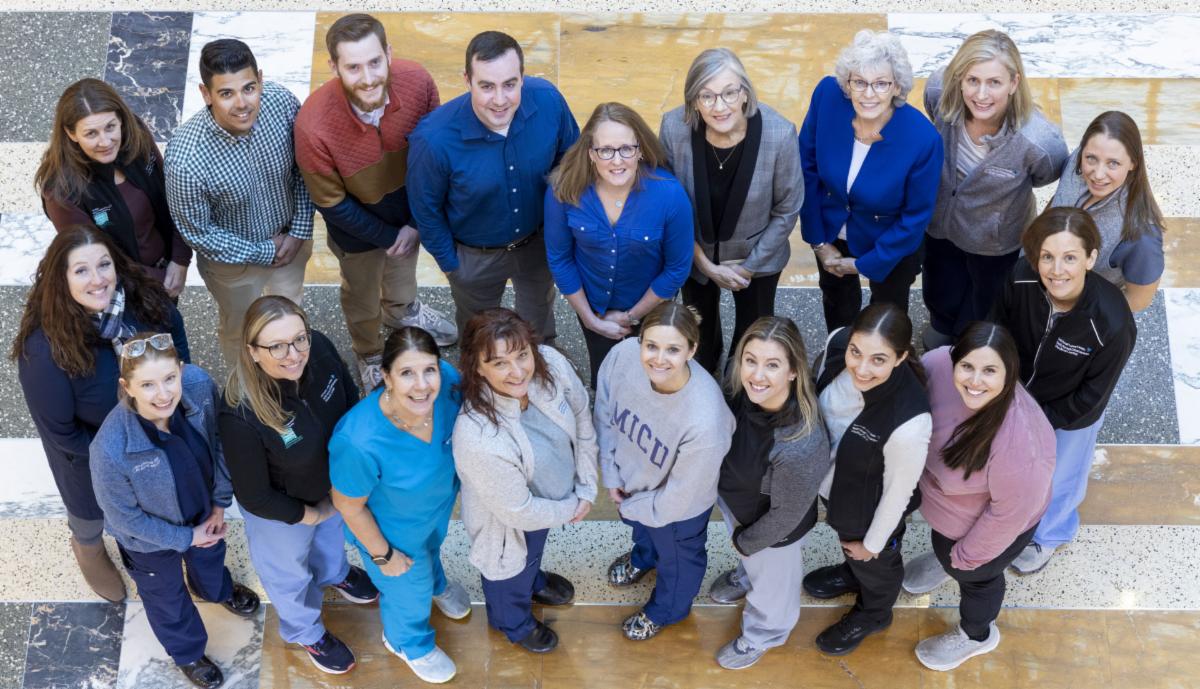
Rapid response leads to national device recall and recognition for ICU nurses at BIDMC

Critical care nurses at Beth Israel Deaconess Medical Center were honored for identifying faulty infusion pumps that posed a nationwide safety risk. After reporting the issue, ICU nurses collaborated with clinical engineers at BIDMC and the manufacturer to protect patients while a fix was developed. Their efforts earned a DAISY Foundation award, FDA recognition, and led to a Class I recall of the pumps.


Read the story and see the video

The Betsy Lehman Center is a Massachusetts state agency that supports providers, patients and policymakers working together to advance the safety and quality of health care.

BetsyLehmanCenterMA.gov

Facebook  Linkedin