New report supports effort to reinvigorate Patient and Family Advisory Councils in Massachusetts
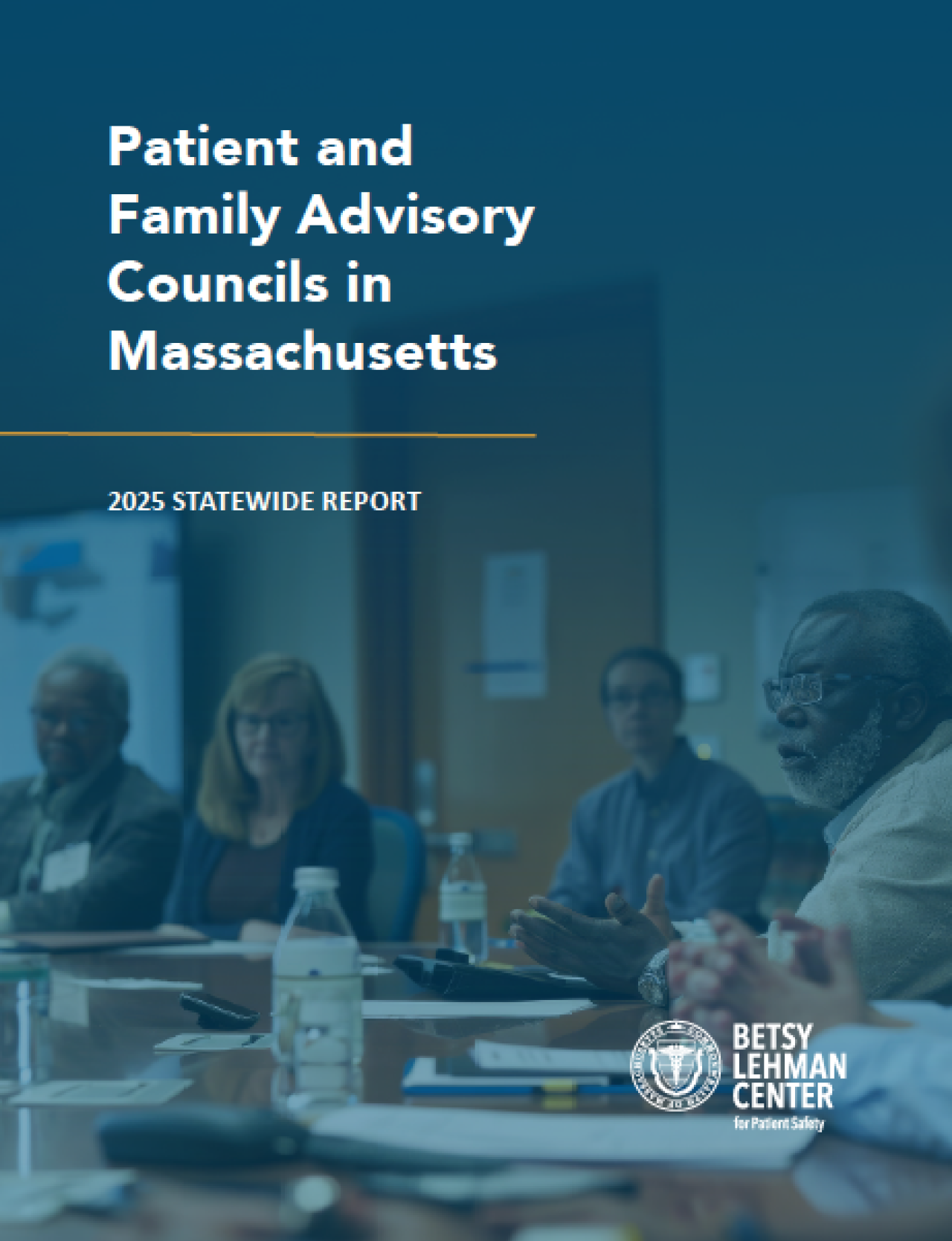
The Betsy Lehman Center’s first annual report assessing the impact of PFACs across the state is now available. The report is part of the Center’s effort to support and reinvigorate PFACs in Massachusetts.
A state law passed in 2008 requires all acute care and rehabilitation hospitals to establish a PFAC to bring the voice of experienced patients, families, and other community members directly into hospital operations, especially regarding the safety and quality of care.
“Patient and Family Advisory Councils carry the voices of the people most affected by health care into the heart of how care is designed and delivered,” said Public Health Commissioner Robbie Goldstein, M.D., Ph.D. “They help hospitals understand the lived experiences of patients and families and turn those insights into safer systems and better outcomes. This report reinforces the power of that partnership and shows why strengthening PFACs is essential to building a health care system that is safer, more transparent, and more humane.”
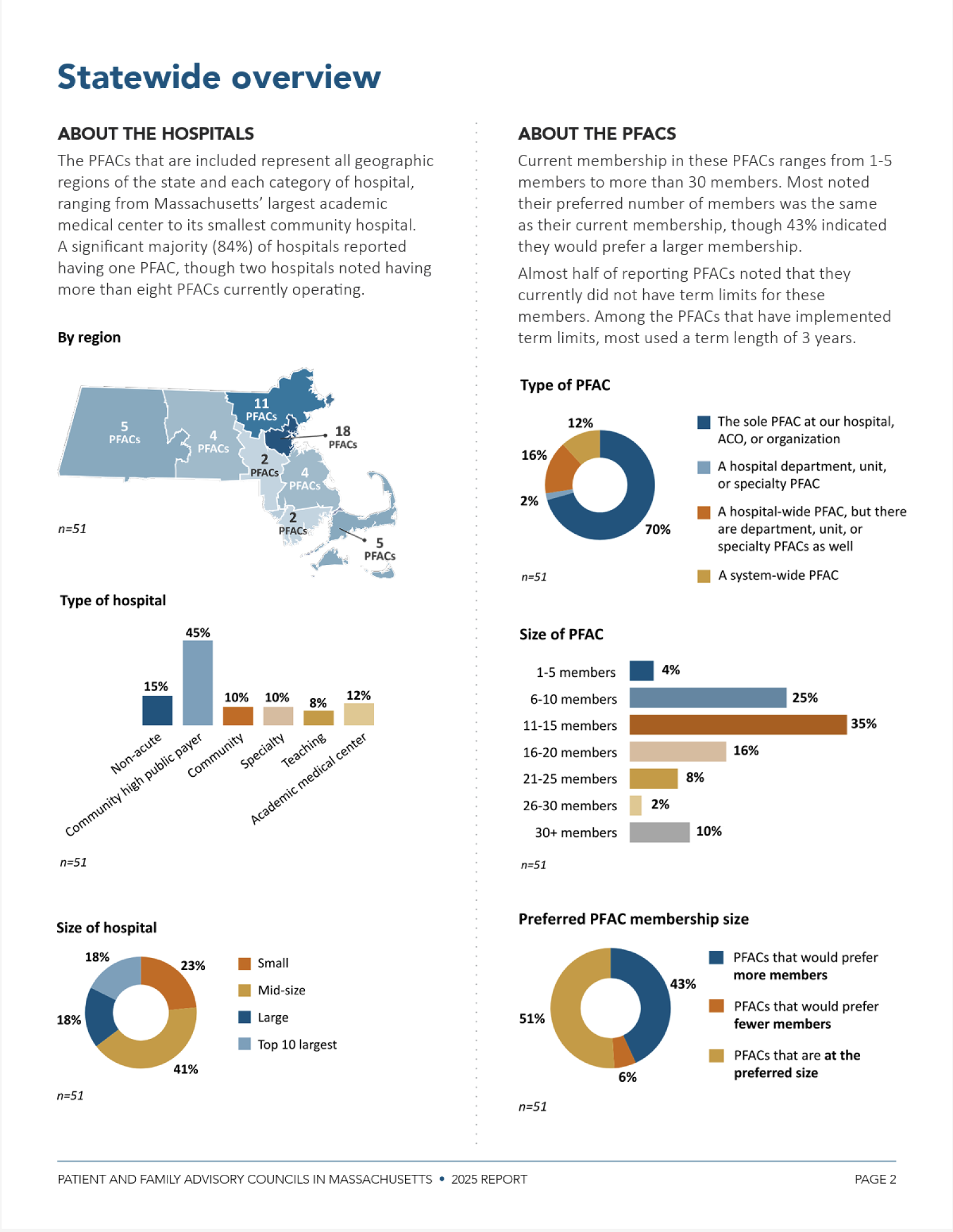
The Massachusetts Department of Public Health has regulatory authority over PFACs, and each hospital must report annually on its PFAC activities. For more than a decade, Health Care for All managed the annual PFAC report process. In 2024, the Betsy Lehman Center assumed this responsibility and redesigned the form to streamline the process and gather data about PFACs that hadn’t previously been collected. The report published this week is a compilation and analysis of the individual report forms submitted by 51 hospitals.
The new report establishes a baseline for future improvement. It also highlights recent individual accomplishments, including the redesign of an emergency department waiting area, improved billing practices, and a patient and family rounding program. Patient safety initiatives include PFAC involvement in preventing falls and workplace violence.
Patients get the best care when they have a true partnership with their care team. I know this from my time as a nurse – patients need to be able to speak up, and we need to listen.
“Patients get the best care when they have a true partnership with their care team. I know this from my time as a nurse – patients need to be able to speak up, and we need to listen,” said Kathleen Campanirio, Community Co-chair of the Southcoast Health PFAC. “PFACs exemplify this principle. We have worked on projects that involve every level of the system, from administrative staff to clinicians to hospital leadership. And when we work together in that capacity, centering the patient’s experience, I believe we can do anything.”
Click the image to enlarge
To further reinvigorate the PFAC community in Massachusetts, the Betsy Lehman Center also provides educational forums, coaching, and networking opportunities. Jane Powers, Director for PFACs at the Betsy Lehman Center, is currently hosting monthly virtual drop-in sessions open to all PFAC members and staff.
“I’m seeing increased involvement from PFACs across the state, from small community hospitals to large academic medical centers,” said Powers. “Some of the PFACs that have not been engaged in the past are coming to the table and asking for help because now we have the resources and connections to support them. I’m excited to see what we can do when we work together, across organizations, to really prioritize patient and family engagement. And, hopefully, we will see that improvement in the data through this new annual statewide report.”
Powers notes that the annual report is one way the Center identifies common challenges, so it can respond and help PFACs address those issues. By establishing metrics and gathering information about best practices, it can also guide efforts to establish new PFACs in some facilities and rebuild them in others, as needed.
The Betsy Lehman Center’s investment in PFACs aligns with its work to advance the goals of the Roadmap to Health Care Safety for Massachusetts. A key recommendation of the Roadmap is to increase the capacity of PFACs to contribute to their hospitals’ safety and quality improvement efforts.