
Leilani Schweitzer knows the 'long tail' of medical harm
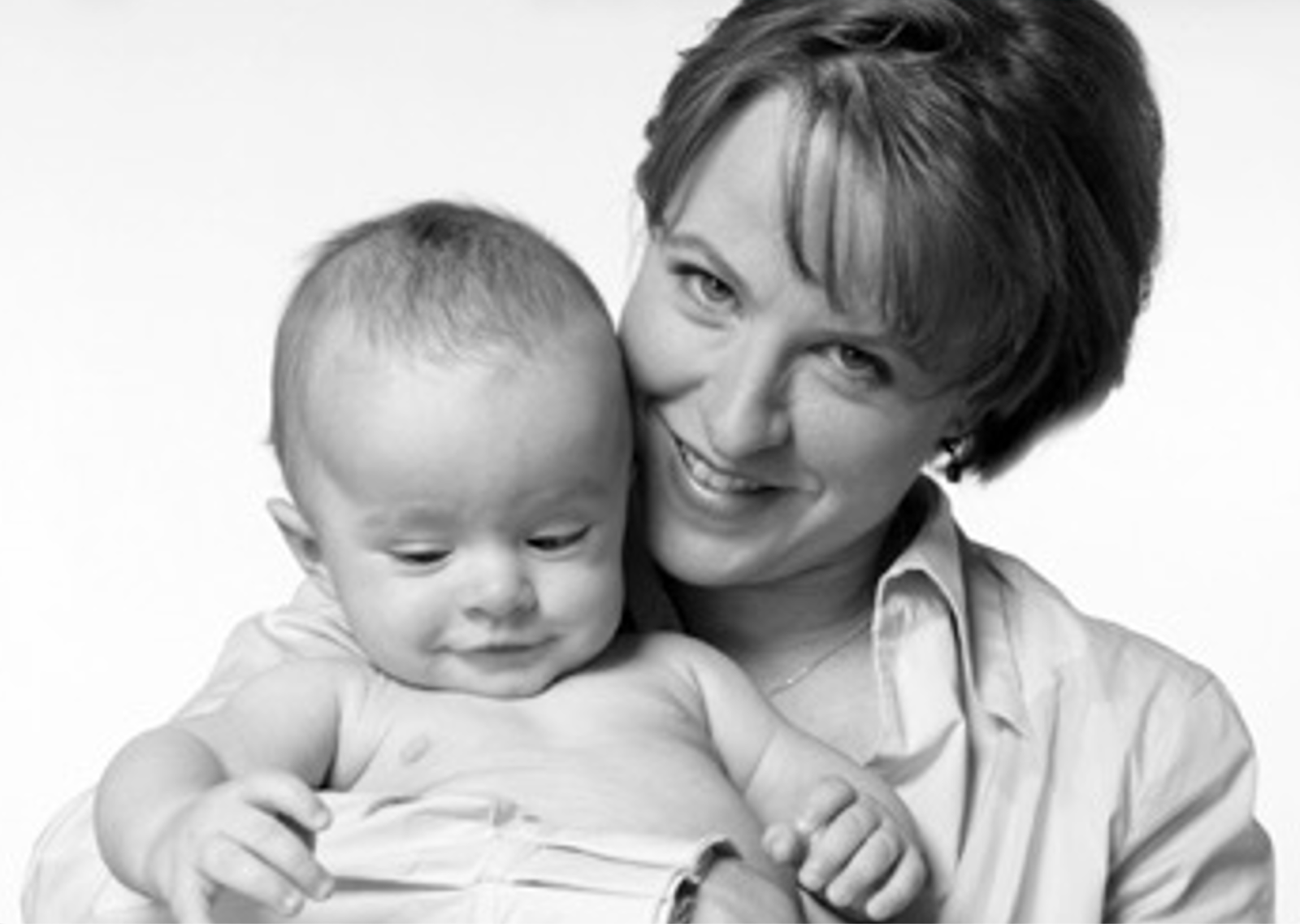
Leilani Schweitzer and her son, Gabriel
Speaking earlier this month at the Betsy Lehman Center’s CARe Forum, Leilani Schweitzer observed that after medical injury, “Patients and families, nurses, clinicians, risk managers, attorneys, all are bonded to each other. We don't want to be, but we really are.” She also noted that everyone is deeply affected when care causes harm.
Schweitzer knows those bonds firsthand, having worked closely with patients, families, clinicians, and others affected by medical harm since the death of her 20-month-old son, Gabriel, in 2005, which was caused by errors in his care. The circumstances of his death had lasting, life-changing effects on the clinicians involved as well as on Schweitzer and other members of her family.
After Gabriel’s death, Schweitzer was hired by Stanford University Medical Center — where Gabriel died — to help develop a process for responding to adverse events with transparency, honesty, and compassion. As Assistant Vice President for Communication and Resolution, working with the Risk Management Claims and Litigation Team, Schweitzer interacted with patients and families, helped review events, oversaw apology and settlement negotiations, and provided disclosure training for clinicians. As co-founder and lead instructor at Comms Corps, she continues to promote honest communication after medical harm.
The unlucky many and the lucky few
Schweitzer notes that Gabriel was among the “unlucky many” harmed by medical error and that she is one of the “lucky few” who have had the opportunity to speak with clinicians and others at the hospital about what happened. The personal and professional toll of adverse events, which Schweitzer calls “the long tail of harm,” is profound and persistent. Programs like CARe can help hospitals avoid causing further harm, as often happens when they refuse to talk honestly with patients and families about these events and leave clinicians to cope on their own.
Schweitzer’s child, Gabriel, was being monitored in the hospital for a failed shunt when a well-meaning nurse silenced his alarms, hoping to help Schweitzer get some sleep. But the nurse mistakenly silenced all notifications — even to the nurses ’station — so no one knew Gabriel’s heart had stopped until it was too late.
Hearts were “scattered to the wind”
In time, Schweitzer learned that Gabriel’s nurse, despite having asked for help with his care that night, was blamed for his death and quickly left nursing. Gabriel’s neurosurgeon also left practice. Schweitzer has come to understand that the nurse, the neurosurgeon, and others acted toward her with compassion throughout the experience, caring for her as well as for Gabriel. The system failed them all.
In the immediate aftermath of Gabriel’s death, his caregivers were shattered. “There were broken hearts scattered to the wind with nothing to help heal them,” says Schweitzer. “You know, death is a full stop for the patient. We can't care for them anymore. But we really can care for the rest of us.”
“You know, death is a full stop for the patient. We can't care for them anymore. But we really can care for the rest of us.”
Schweitzer points out that harm is harder to measure than other elements of patient safety, such as infection rates. “It's easy and convenient to measure things with clean edges,” says Schweitzer, “But harm doesn't have clean edges. And neither does grief or love, but we know they exist.” Harm may be hard to measure, but acknowledging it with compassion can help heal those who are affected.
Ask two questions to promote healing
To focus attention on providing help in the moment, Schweitzer suggests hospitals ask two yes-or-no questions when a patient has been harmed. The first is for patients and families:
"Do you understand what happened in your care?"
If the answer is “no,” hospitals should encourage patients and families to ask all the questions they have and then do everything possible to answer them honestly and to promote understanding of what actually happened.
The second question is for clinicians:
"Do you feel supported?"
A “no” answer should prompt the hospital to ask clinicians about their feelings and provide the support they need.
Schweitzer knows what it can look like when the answers are “yes.” At the CARe Forum, she described an experience from her time working at Stanford. “I helped review an event where a child came into the ED, and everything went wrong, and that child died.” The case was complex; many things had gone wrong. Schweitzer watched the parents and clinicians arrive for a meeting and noticed everyone’s body language made it seem like they were walking into a storm — heads down and shoulders hunched, braced for what was to come.
The father berated the physician, saying, “You are the face of everything that has gone wrong.” Tears running down her face, the physician sat in silence. During the meeting, the team explained in detail what had happened, much of which the parents had missed. Fully engaged in their child’s care, they understandably had little awareness of what was happening outside their daughter’s room.
The father was eventually able to say, “We had no idea you were fighting so hard for her.” The meeting ended with parents and physician embracing. “It was an amazing thing to witness,” Schweitzer says. “We did not take away all their pain, absolutely not. We did not give them closure. Closure is a myth. Don't let anybody talk you into thinking that's real. But we did give them a better understanding of one of the most important hours of their life. And it was profoundly healing for that physician as well.”