Support Report
September 16, 2026
Q&A with Dr. Daniel Saddawi-Konefka, President and Co-founder of The Emotional PPE Project
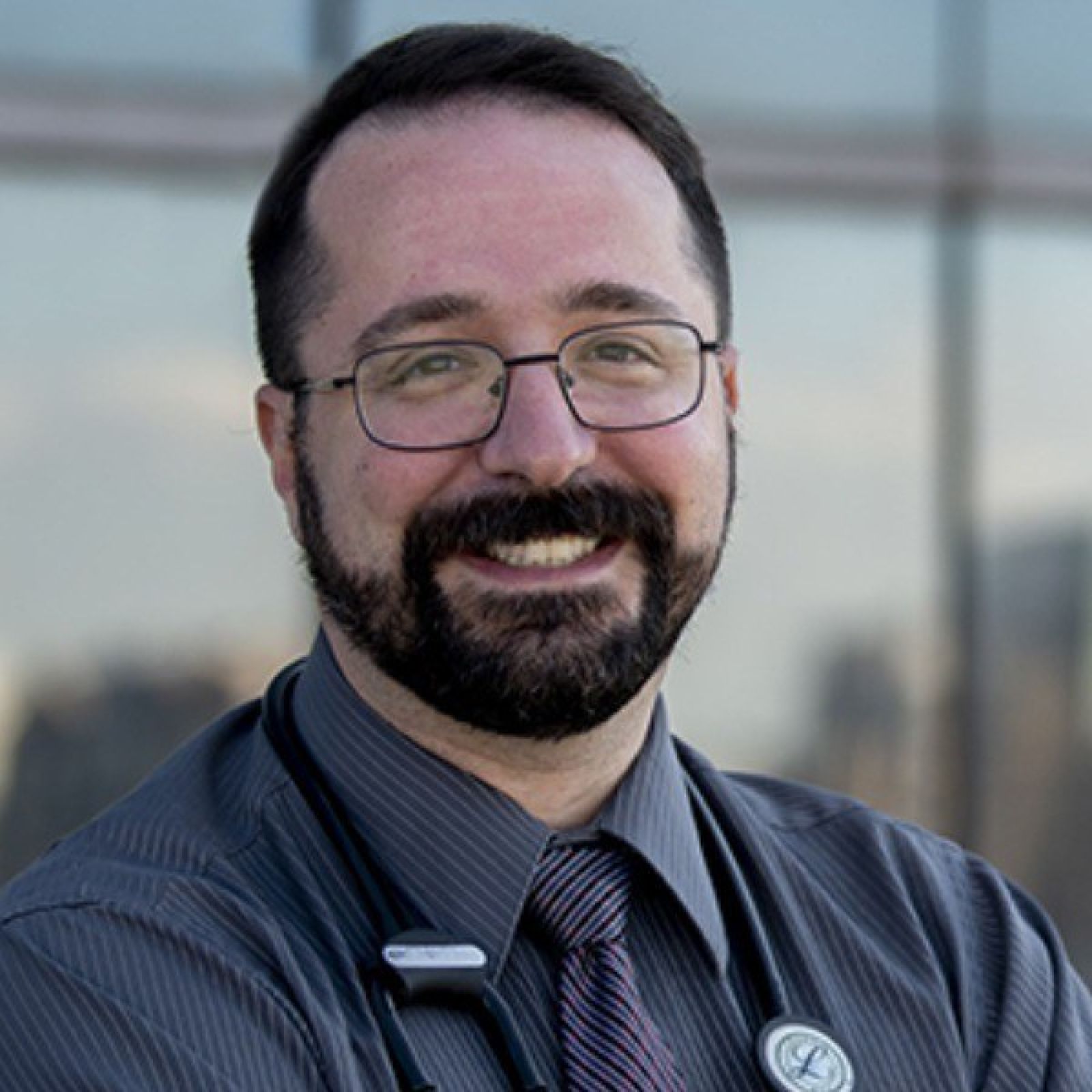
Daniel Saddawi-Kanefka, MD, MBA
Daniel Saddawi-Konefka, MD, MBA, is a practicing critical care physician and anesthesiologist at the Massachusetts General Hospital, Program Director of Anesthesiology Residency at MGH, and Associate Professor of Anaesthesia at Harvard Medical School. He is also President and Co-founder of The Emotional PPE Project, a non-profit organization that champions the well-being of healthcare workers by reducing barriers to mental and emotional health care. Dr. Saddawi-Konefka talked with the Support Report about his work addressing the emotional needs of healthcare workers.
Support Report: How did you become interested in the mental health of physicians and other healthcare professionals? What led you to found the Emotional PPE project?
Dr. Saddawi-Konefka: A number of factors converged to spark my interest in mental health. My early academic work focused on physicians’ growth trajectories, self-regulation, intrinsic motivation, and the use of feedback. The more I worked in that area and met with trainees individually, the more I realized that, for many, untreated emotional distress was the biggest bottleneck to their growth. And for various reasons, they weren’t seeking help.
Unfortunately, losing friends and mentees to suicide also drew me to this work. I’ve never lived by the mantra, “It is what it is.” I always want to ask, “What could it be, and what could we be doing differently?”
The pandemic was also a catalyst. At the beginning, I remember extensive reporting on ventilator and PPE shortages. All I could think was, “Wow, a real shortage here is going to be the mental health of our healthcare workforce.” I knew we were not doing well even before the pandemic. So, in March 2020, I joined forces with a friend and neighbor, and we co-founded The Emotional PPE Project to provide a directory of mental health professionals willing to provide free, pro bono care to anyone in healthcare across the country. Since then, we’ve expanded the project to include research, advocacy, and education.
Support Report: You are the Program Director for the anesthesia residency program at MGH. How does this generation of residents approach their own mental health?
Dr. Saddawi-Konefka: This is my 10th year as Program Director, and we have around 115 residents at MGH. In this role, my duties vary, but my favorite part is advising and mentoring individual residents.
At a high level, I don’t think they are all that different from when, for example, I was a resident. The issues they face are similar, but the role modeling and environment have changed. Maybe because of that, trainees today are markedly more willing to talk about mental health as compared with my generation. The same could probably be said about my generation compared to the generation before. But being willing to talk about it and being willing to get help for yourself are different things, and that second part has moved much more slowly.
I can’t think of anyone in our current class who wouldn’t support a co-resident with depression, PTSD, or another mental health issue. They’d be happy to give them a call or cover a shift. But what they still lack is self-compassion to do it for themselves. Residents still tend to view asking for help as a personal failing. One tactic I use is to flip the roles: I ask the trainee to imagine a future mentee coming to them with the same challenge and to say out loud what they would want for that mentee. Then I ask what they want to be able to say they did for themselves and how powerful that story could be for their mentee.
Support Report: Is the need for emotional peer support increasing among healthcare professionals, or is there simply greater awareness of an underlying need?
Dr. Saddawi-Konefka: I’m confident that awareness is increasing. Whether the need is increasing too is harder to say. External forces today may be increasing the need for emotional support. Patient care throughput is much higher, so practice conditions are different and more compressed than they used to be.
What I’m most certain about is that the barriers to getting help haven’t moved nearly as much as the awareness has. We’ve had a somewhat broken system for emotional well-being for a long time. The things that get in the way of clinicians seeking help are, first, a culture that normalizes inadequate self-care and almost rewards or celebrates people who don’t take care of themselves. Second, we confuse illness with impairment. Illness is having a condition, like depression, anxiety, diabetes, or asthma. Impairment is being unable to practice safely. Most clinicians with a mental health condition are not impaired, any more than a colleague with well-managed diabetes or asthma is.
But a clinician who has watched a colleague treated differently after taking leave, or who has been asked about a diagnosis on a credentialing application, learns that getting care might count against them later, whether on an application, in a job interview, or in a promotion decision. So they don’t get care, which is exactly backwards for patient safety. Worse still, many clinicians make the same mistake about themselves, with a self-stigma that tells them that getting help means they are less than they would otherwise be. And third, logistics — time, access, those sorts of things — get in the way. Those three things haven’t changed much. On the other hand, we’ve seen a groundswell of activity around licensing and credentialing reform, for example, driven by a larger social movement around mental health. The culture in medicine hasn’t totally caught up yet. We’re starting to see change, but it’s been slow-moving.
Support Report: How does peer support fit in with other approaches to mental health care for clinicians?
Dr. Saddawi-Konefka: One reason peer support is so valuable is that, compared with hiring a coach or seeing a mental health professional, it’s such a small step. It’s peer support. There’s no need to explain the clinical context. A peer knows what it means to be on call. They know what it means to lose a patient, to feel distressed, and they’ve been trained to sit with you, listen reflectively, and validate your emotions. Meeting with a trained peer in the context of your work is one of the smallest steps you can take. And sometimes, that’s all that’s needed.
Peer support programs also benefit the people who receive the training. When someone is trained as a peer supporter, it seems to naturally shift their attitude toward seeking help. I’m not aware of any good studies on this, but there may be an inflection point where, if you train a certain percentage of people in a group in peer support principles, the culture really starts to change.
Good programs also train peers to recognize when someone needs more than a conversation and to make a warm handoff to professional care, so peer support becomes the on-ramp to the rest of the safety net rather than a substitute for it. Even if every healthcare worker had a dedicated mental health professional, I would still want peer support because it is the step people will actually take.